
Does Crunchyroll Need A Business Model Makeover?
and how Anime Studios are taken for a ride by industry structure (Part 1)


Hello there,
My favorite part of writing company essays is research. It’s fun to sink my teeth into the internet’s finest. The problem is, I’m not sure if these are helpful or just (self) entertainment.
If you enjoy strategy essays like this, do let me know.
Today, we talk about Crunchyroll. This is the first part, where we dive into the anime market and its dynamics.
Best,
Ved
“The bear case in 5 years..if there is actually good quality stuff on YouTube or whatever..do people ask ‘I don’t know why am I still paying .. $35/month for this walled SVOD service (where) I don’t always find something to watch?’”
- Doug Shapiro, The Mediator, Industry Analyst
Online television is a messy cut-throat business.
When we switched from traditional cable TV to SVOD (subscription video on demand), many changes happened with TV, such as:
Content: The way quality TV shows were produced shifted to storylines that led to eachother and production schedules had to adjust.
E.g. Imagine trying to watch Breaking Bad’s while missing the previous week’s episode with the old TV model.
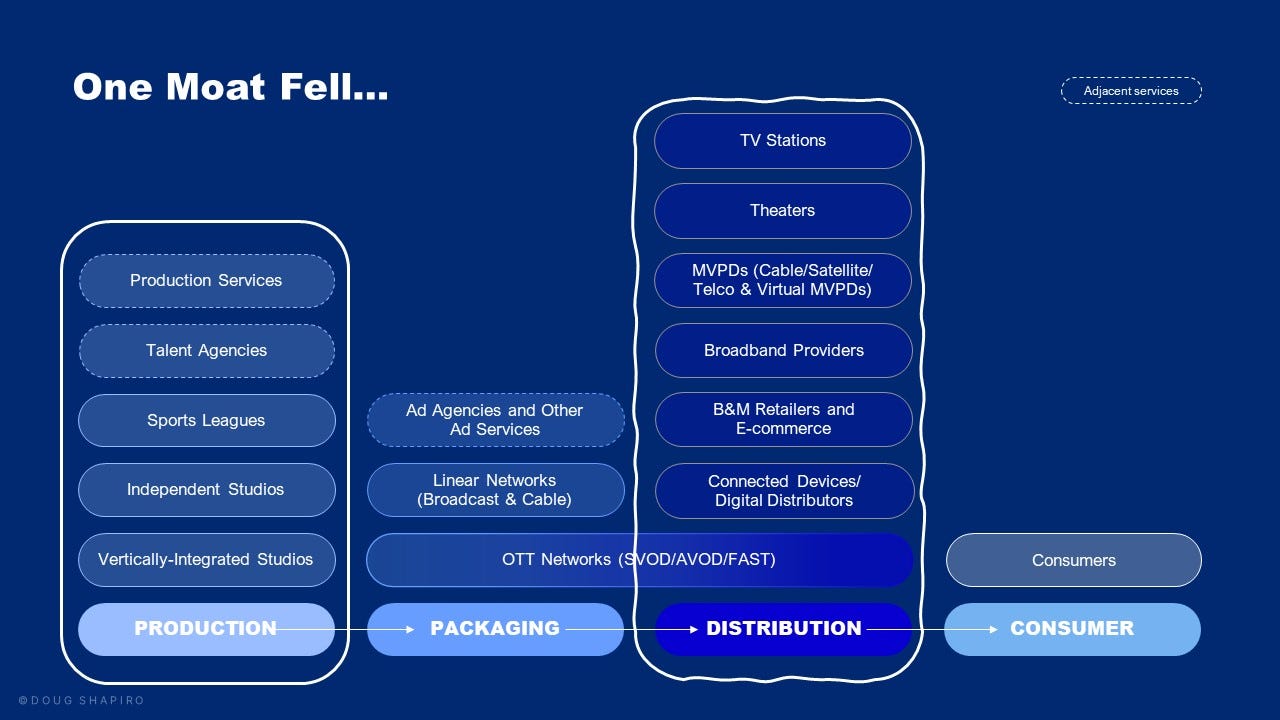
Industry Structure: The access moat was eroded by online players like Netflix.
Substitutes: Content formats varied across players like Disney and UGC (User Generated Content) providers like YouTube and TikTok.
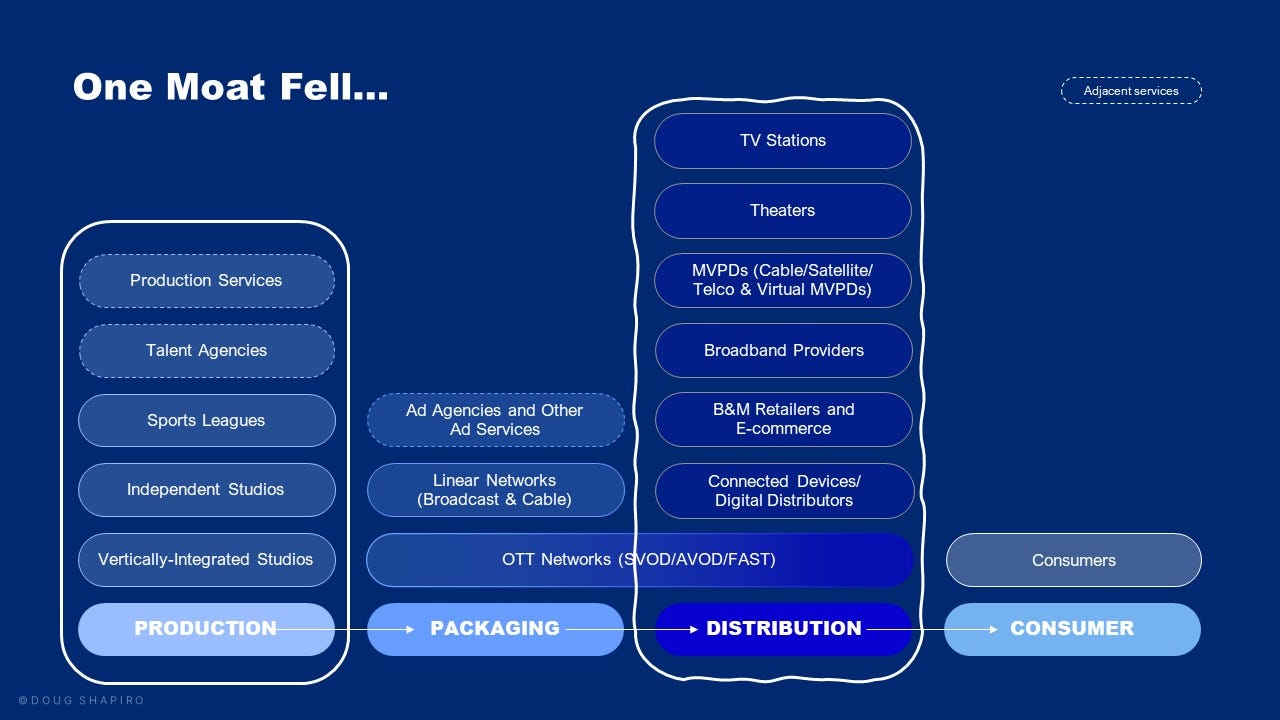
As OTT services entered the field, the distribution moat crash (Source: Doug Shapiro)
And while there are many analyses about players like Netflix and HBO Max, I want to write about something different: The Business of Anime.
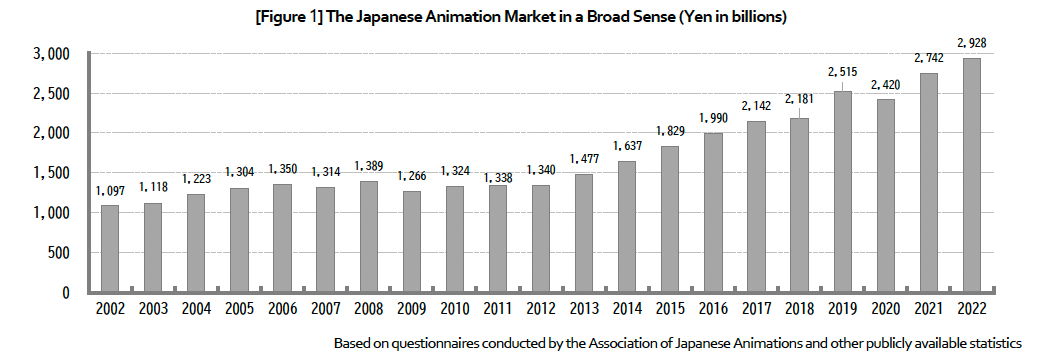
As of 2022, Anime is a ~$20 billion industry. Over 10 years, the industry grew by 198%. This growth has been driven by overseas expansion and internet distribution.
And when talking about anime and online streaming, it’s hard not to mention Crunchyroll.
Crunchyroll, the (supposed) King of Anime
Crunchyroll is the Netflix of Anime.
A niche market leader in this space, it was acquired by Sony for $1.1 Billion for their 5M subscribers and 120M registered users at the time.
(they now have 15M paid subscribers.)
In addition, Crunchyroll has monopolized this market by merging with Funimation, their other major competitor that was owned by Sony. They have also vertically integrated into the Western markets, acquiring Right Stuff, an online retailer for anime and manga merchandise.
With an exploding user base and a nearly monopolized market, what could go wrong?
Well, there are three problems Crunchyroll face as a business:
Summary:

1) Archaic industry dynamics, relying on burned-out animation teams

(we’ll discuss this one today)

2) Thriving piracy community due to disgruntled consumers for sub-par service offering

3) Bigger giants like Netflix and Hulu swinging into anime
While we look at these problems, a question I want to explore is:
Should Crunchyroll change its business model from traditional SVOD?
First, let’s understand how Crunchyroll makes money and who are the players in this ecosystem.
Anime is a billion-dollar industry, where animators can’t afford rent
Crunchyroll is in a billion-dollar niche, with issues.
Earning an ARR of $180M through subscriptions, the streamer plays a massive role in this ecosystem for their overseas distribution.
But it’s just an intermediary.
This ecosystem has many players who need their cut. To understand where is the money flowing, let’s look at these players closer:
Production Committee - They are a collection of companies (e.g. comic publishers, toy makers, etc.) who pool their financial resources to co-invest and produce the show. They serve a risk management role, to protect studios in case the shows flop.
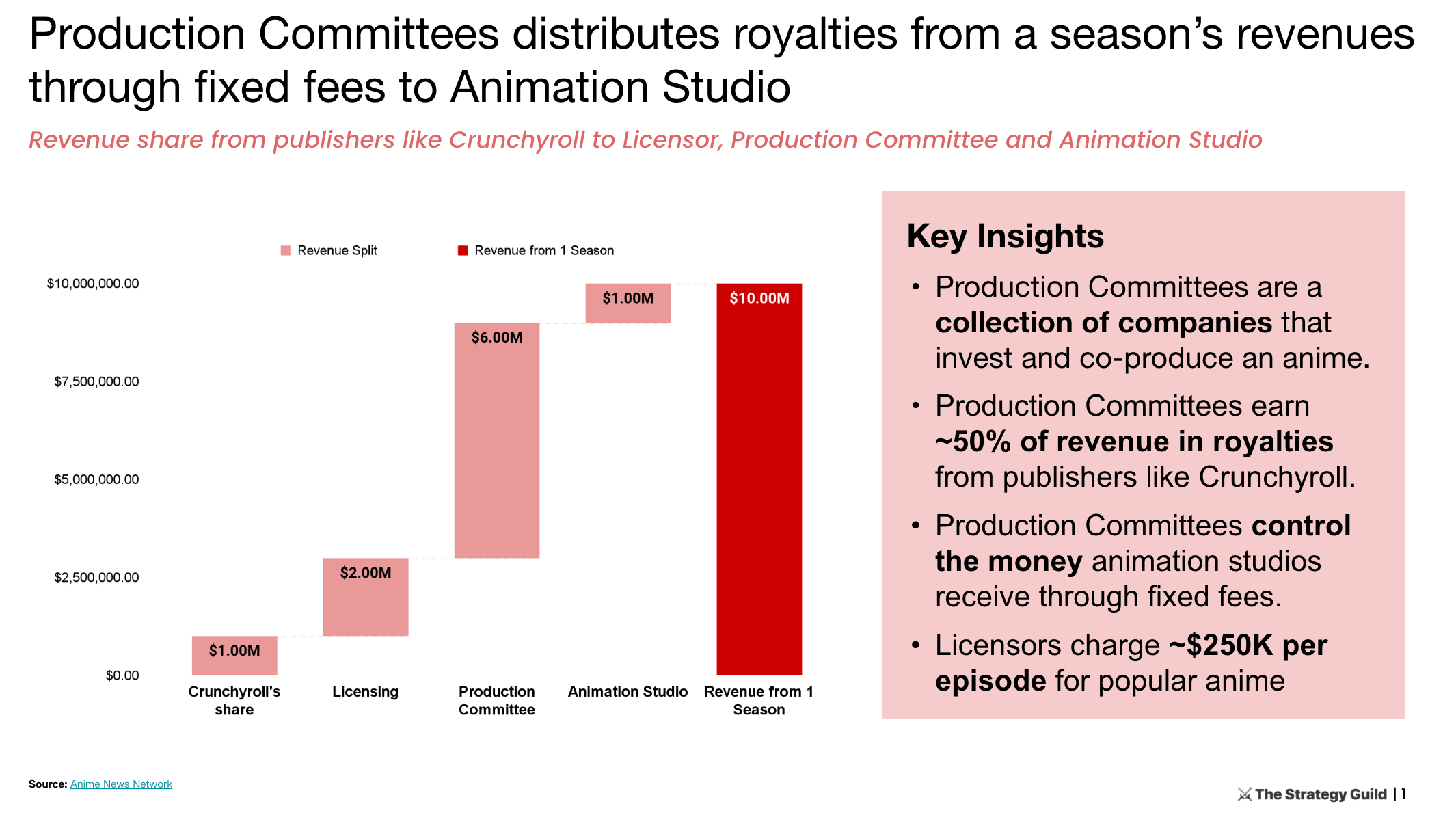
But as seen in the slide above, Production Committees keep an iron fist on the purse strings of animation studios.
Studios earn a fixed fee from the production committee, rather than a share of the royalties. Instead, the committee gets their cut first and hands off any leftovers to the studios.

Licensors - Licensors are bureaucrats. They work with overseas publishers like Crunchyroll and negotiate the licensing agreement contract for the signing process. Licensing charges depends on the popularity of the anime in question but can go up to $250k/episode. With an average episode count of 11-12 episodes, licensors can earn a breezy $1-3M per season.
Animation Studios - The heroes of this industry, but also the ones kicked around. Comprises of multiple roles such as the anime director, animator, and editor. It’s estimated that an average anime season costs around $2 million to produce, which isn’t possible to recoup for most shows.
As a consequence of how this system is set up, animators in this industry are still known to barely afford rent and burn out in the process. It also creates pressure for delivering hits in the industry, with a VC-like mentality on delivering a portfolio of shows, hoping for one or two ‘unicorns’.
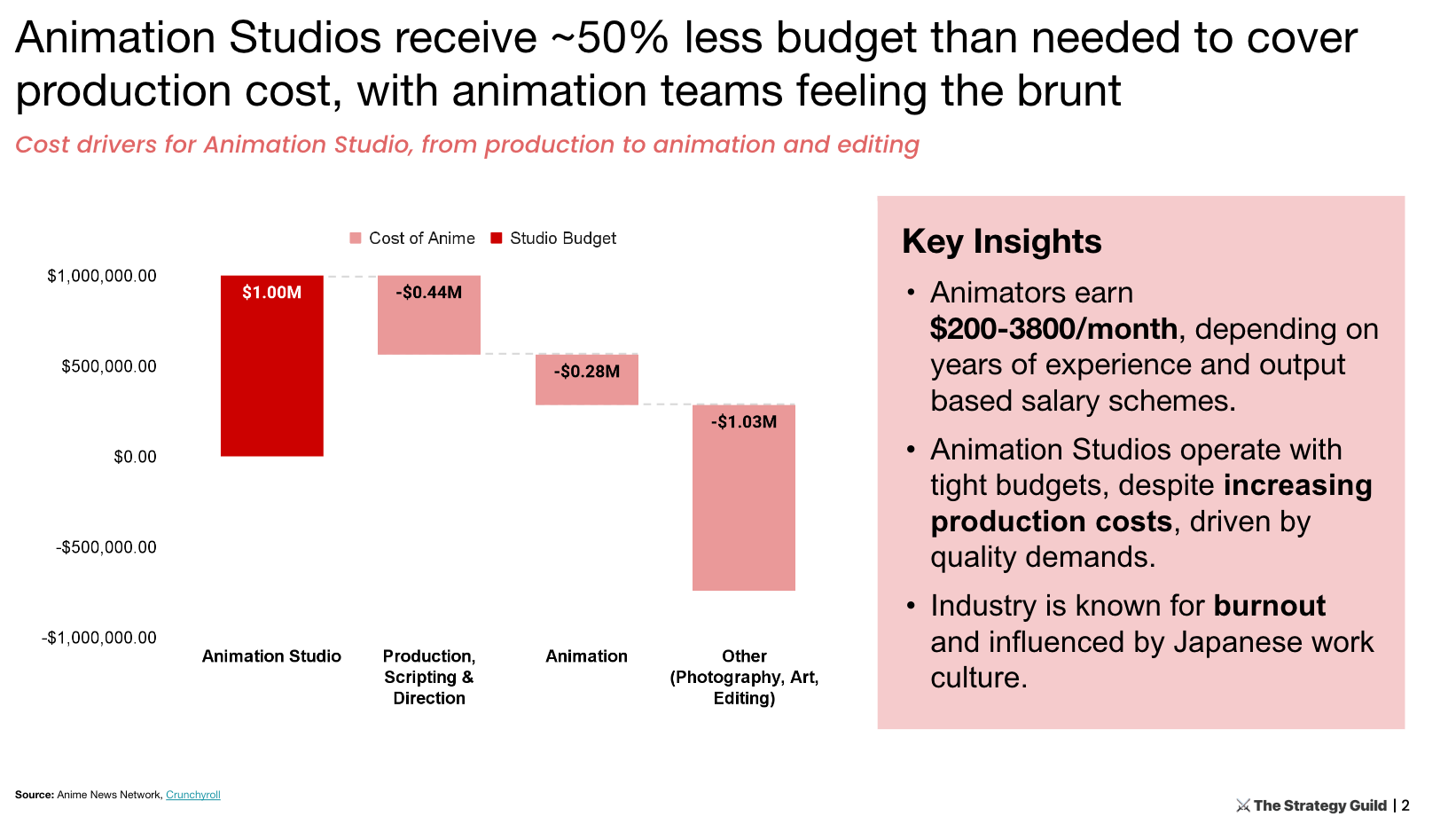
With the current ecosystem, the industry’s success isn’t reaching its animators. While passion and overbooked production schedules are making it all work somehow, the question is:
How long will this last?
Taking a step back from the industry ecosystem, there’s another issue plaguing Crunchyroll: Piracy.
That’s for another piece:

PS: Credits to Mark Nold for his consulting PPT template. Saved me a lot of time for this piece.